Some places impress you with their natural beauty, while others capture your attention through their history and culture. Bhutan offers both. Surrounded by the mighty Himalayas, this beautiful kingdom is known not only for its peaceful landscapes and monasteries but also for its distinctive traditional architecture.
From massive fortress-like monasteries overlooking rivers to colourful wooden houses decorated with intricate paintings, Bhutanese architecture reflects a deep connection between tradition, spirituality and nature.
What makes these buildings even more fascinating is that their beauty goes beyond appearance. Every design, colour, carving and structure carries cultural or religious significance. Unlike modern buildings that often focus primarily on functionality, traditional Bhutanese structures bring together craftsmanship, symbolism and practicality.
Whether you’re a traveller interested in history, an architecture enthusiast or someone planning a Bhutan holiday, exploring these structures offers a unique way to understand the country’s identity.
Let’s discover seven remarkable features that make Bhutanese architecture truly special.
Table of Contents
- The Cultural Roots of Bhutanese Architecture
- Dzongs: The Magnificent Fortresses of Bhutan
- Monasteries That Reflect Spiritual Heritage
- Traditional Bhutanese Houses and Their Designs
- Intricate Woodwork and Colourful Paintings
- Natural Materials and Sustainable Construction
- Architecture That Preserves Bhutanese Identity
- Best Architectural Places to Explore in Bhutan
- Frequently Asked Questions
1. The Cultural Roots of Bhutanese Architecture
Bhutanese architecture has developed over centuries under the influence of Buddhist traditions, local craftsmanship and the country’s Himalayan environment.
Buildings in Bhutan are designed to reflect harmony between people, nature and spirituality. Traditional construction techniques have been passed down through generations, allowing architectural styles to retain their identity even as modern construction methods become more common.
One of the most recognisable characteristics is the traditional use of whitewashed walls, sloping roofs, wooden windows and decorative elements.
Religious symbolism also plays an important role. Colours, paintings and architectural details often represent Buddhist beliefs and cultural traditions.
This combination of history, spirituality and craftsmanship gives Bhutan its distinctive architectural character.
2. Dzongs: The Magnificent Fortresses of Bhutan
If there is one architectural structure that represents Bhutan, it is the dzong.
Dzongs are large traditional fortress-monasteries that historically served as important administrative and religious centres. Their impressive structures combine massive white walls, wooden balconies, beautifully decorated windows and spacious courtyards.
One of the most famous examples is Punakha Dzong, situated at the meeting point of the Pho Chhu and Mo Chhu rivers. Surrounded by beautiful natural scenery, it is considered one of Bhutan’s most impressive architectural landmarks.
Another remarkable example is Rinpung Dzong in Paro, known for its traditional architecture and cultural importance.
What makes dzongs fascinating is their combination of defensive design, religious spaces and administrative functions. They represent an important part of Bhutan’s history and continue to play a role in the country’s cultural and spiritual life.
3. Monasteries That Reflect Bhutan’s Spiritual Heritage
Monasteries are an essential part of Bhutanese architecture. They are not simply places of worship; they are important centres of learning, meditation and cultural preservation.
Perhaps the most iconic example is Paro Taktsang, popularly known as Tiger’s Nest Monastery.
Built dramatically on a cliffside overlooking the Paro Valley, this monastery is one of Bhutan’s most recognisable landmarks. Its location alone makes it extraordinary, while its traditional wooden structures and colourful religious details add to its beauty.
Other notable monasteries include:
- Kyichu Lhakhang: One of Bhutan’s oldest and most historically significant temples.
- Chimi Lhakhang: A famous temple located in the beautiful Punakha region.
- Gangtey Monastery: A prominent religious complex overlooking the Phobjikha Valley.
Each monastery offers visitors a glimpse into Bhutan’s Buddhist traditions, architectural craftsmanship and peaceful way of life.
4. Traditional Bhutanese Houses and Their Unique Designs
Beyond monasteries and dzongs, traditional Bhutanese houses are equally interesting.
Most traditional homes feature whitewashed exterior walls, wooden window frames, decorative paintings and sloping roofs. Their designs are influenced by the local climate, available construction materials and regional traditions.
Many traditional houses also have multiple floors, with different areas used for living, storage and other household activities.
The upper sections often feature beautifully decorated wooden windows, while the exterior walls may display traditional motifs and patterns.
These houses are especially beautiful in villages such as Paro, Punakha and the surrounding Himalayan settlements.
For travellers, exploring these neighbourhoods offers an opportunity to experience Bhutan beyond its popular tourist attractions.
5. Intricate Woodwork and Colourful Traditional Paintings
One of the most striking features of Bhutanese architecture is its detailed woodwork.
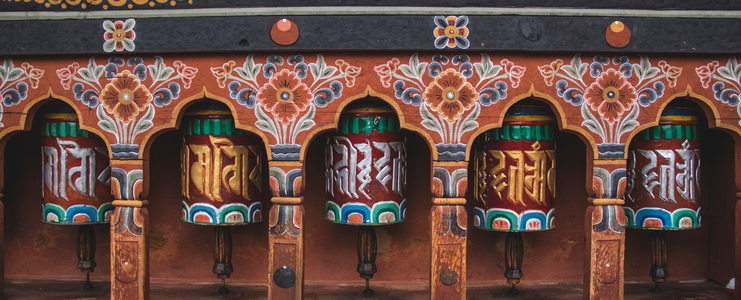
Traditional wooden windows, balconies, doors and pillars are often decorated with intricate carvings and colourful designs. These details give buildings their distinctive appearance and highlight the skills of local craftsmen.
You will frequently notice traditional colours such as red, yellow, white, green and blue. In religious settings, these colours and decorative patterns can carry symbolic meanings connected to Buddhist traditions.
Traditional paintings may include floral patterns, auspicious symbols and religious motifs.
Unlike ordinary decorative elements, these designs are an important expression of Bhutan’s cultural identity.
6. Natural Materials and Sustainable Construction
Bhutanese architecture has traditionally relied on locally available materials such as timber, stone, earth and bamboo.
These materials were selected according to regional availability, building requirements and local climatic conditions.
Thick walls, carefully designed roofs and practical layouts helped traditional buildings respond to the challenges of the Himalayan environment.
Bhutan’s architectural heritage also reflects an appreciation for the surrounding natural landscape. Many structures are positioned to complement mountain slopes, valleys and rivers rather than overpower their surroundings.
Today, Bhutan continues to promote the preservation of its traditional architectural character through building regulations and cultural conservation efforts.
This connection between local resources, traditional knowledge and the environment makes Bhutanese architecture particularly interesting from a sustainability perspective.
7. Architecture That Preserves Bhutanese Identity
What makes Bhutan different from many other destinations is its continued emphasis on preserving its cultural identity.
Traditional architecture remains visible in religious institutions, public buildings, homes and important urban spaces.
Rather than treating historic buildings as outdated structures, Bhutan recognises them as an important part of its heritage.
For travellers, this creates a distinctive experience. Walking through the streets of Paro or visiting a historic dzong feels different from exploring a modern city.
Every building offers a glimpse into the country’s traditions, beliefs and history.
This is one of the reasons why Bhutan is such a rewarding destination for travellers interested in culture, history and meaningful experiences.
8. Best Places to Explore Bhutanese Architecture
If you’re planning a trip to Bhutan, consider adding these destinations to your itinerary:
Punakha: Explore the magnificent Punakha Dzong and admire its riverside setting.
Paro: Discover Rinpung Dzong, Kyichu Lhakhang and the famous Tiger’s Nest Monastery.
Thimphu: Experience the country’s capital and visit traditional religious and cultural landmarks.
Trongsa: Explore Trongsa Dzong, an impressive historical fortress overlooking the surrounding valley.
Phobjikha Valley: Discover Gangtey Monastery and enjoy the peaceful Himalayan surroundings.
Each destination offers a different perspective on Bhutanese architecture and its cultural significance.
Final Thoughts: Discover Bhutan Beyond Its Mountains
Bhutan is much more than beautiful mountains, peaceful valleys and scenic road journeys. Its architecture tells stories of faith, craftsmanship, history and a culture that continues to value its traditions.
From the magnificent dzongs of Punakha and Paro to the cliffside beauty of Tiger’s Nest Monastery, every structure offers something worth discovering.
If you’re planning a Bhutan holiday, don’t limit your journey to sightseeing alone. Take time to explore its monasteries, walk through traditional villages, observe local craftsmanship and understand the stories behind its buildings.
At High Mountains, we believe that travelling is about discovering places beyond their photographs and experiencing the culture that makes every destination unique.
So, if Bhutan is on your travel bucket list, let its architecture, traditions and breathtaking landscapes become part of your next unforgettable journey.
Explore Bhutan with High Mountains and discover the beauty of the Himalayas, one experience at a time.
Frequently Asked Questions (FAQs)
1. What makes Bhutanese architecture unique?
Bhutanese architecture is known for its traditional wooden windows, whitewashed walls, decorative paintings, sloping roofs and distinctive fortress-monastery structures called dzongs.
2. What is a dzong in Bhutan?
A dzong is a traditional fortress-monastery that historically served as an administrative and religious centre. Punakha Dzong and Rinpung Dzong are famous examples.
3. Which is the most famous architectural landmark in Bhutan?
Paro Taktsang, popularly known as Tiger’s Nest Monastery, is among Bhutan’s most recognisable architectural and cultural landmarks.
4. What materials are traditionally used in Bhutanese architecture?
Traditional Bhutanese buildings commonly use timber, stone, earth and bamboo, depending on regional availability and construction requirements.
5. Which places are best for exploring Bhutanese architecture?
Punakha, Paro, Thimphu, Trongsa and Phobjikha are excellent places to explore Bhutan’s traditional buildings, monasteries and dzongs.
6. Why is traditional architecture important in Bhutan?
It represents the country’s cultural identity, Buddhist heritage, traditional craftsmanship and historical development. Preserving these buildings helps maintain Bhutan’s distinctive architectural character.